If you’d told me back in July 2024 that Zenless Zone Zero’s most coveted gear would one day resemble a miniature haunted shrine, I would’ve laughed so hard my Bangboo partner would’ve run away. When the game launched, I spent the first 15 minutes admiring the dazzling character designs, the smooth combat, and then… the W-Engines. Every single one was a perfect sphere. Cute? Sure. But also – how do I put this nicely – a little too homogenous. I even remember asking producer Zhenyu Li about the design choice, and the answer was polite and lore-friendly, but my inner gacha goblin was already dreaming of stabby bits, flamethrowers, or at least something with corners.
Fast forward to early 2025, and boy, did HoYoverse deliver a curveball. Hoshimi Miyabi’s signature W-Engine, Hailstorm Shrine, burst onto the scene and absolutely shattered the circular mold. This thing wasn’t just an engine – it was an actual tiny shrine, complete with ornate details, a roof that looked like it could start snowing at any moment, and… a tiny spirit called Tiny Tailless living inside, cozied up on a plush cushion. I stared at my screen for a solid minute. An S-rank that wasn’t a sphere? It felt like discovering your toaster could also DJ at parties.
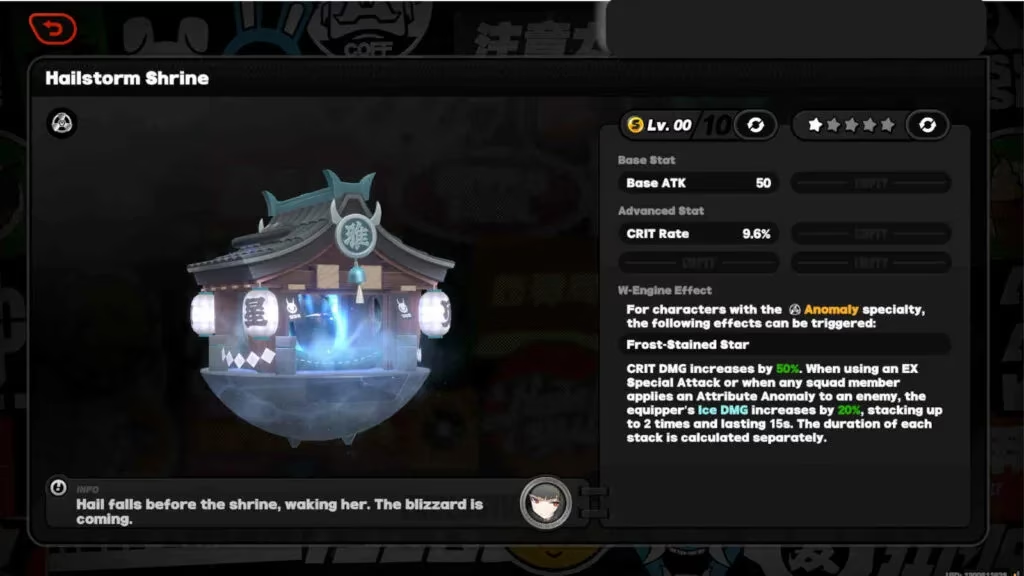
That moment marked more than just a new BIS weapon – it was a design manifesto. The ZZZ development team later confirmed (with a smile I could almost hear behind the text) that they never truly intended to keep W-Engines trapped in a perfect-circle prison. Instead, for exclusive S-Class agents, they’d start from the character’s personality and IP, aiming to give each engine a look you’d recognize from across the Hollow. And with Miyabi, they took her cursed blade “Ethereal-Slaying Katana – Tailless” and extracted its demonic essence into a tiny, slightly terrifying, but also weirdly adorable spirit. Then they gave it a house. A literal shrine, where the blade’s soul rests when sheathed. I mean, come on – that’s poetic gacha cinema.
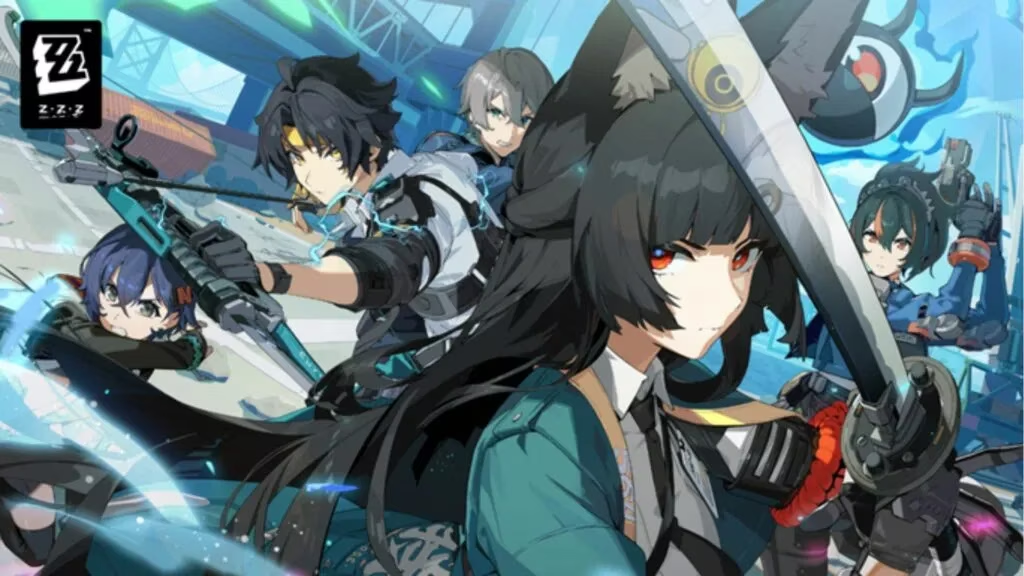
Ever since that fateful version 1.4, the W-Engine design philosophy has been running wild – in the best possible way. By 2026, the streets of New Eridu are paved with engines shaped like shattered vinyl records, dimensional cubes that hum lullabies, and one that’s literally a floating bowl of ramen (don’t ask about the stats, it’s Anby’s favorite). They haven’t abandoned the spherical roots entirely – some agents still rock the classic sleek orbs – but the diversity has turned each new banner into a tiny art exhibit. I’m not saying I pulled for a W-Engine just because it had a tiny swing set inside, but I’m also not not saying that.
What’s even more impressive is how the team kept the promise they made back then: “We will not impose excessive restrictions on the shape.” And they meant it. The engine for a rockstar agent might look like a shattered amplifier, while a botanist’s engine could literally bloom. It’s become a game within the game – guess that W-Engine shape, and then giggle when it’s somehow an even odder silhouette than you imagined.
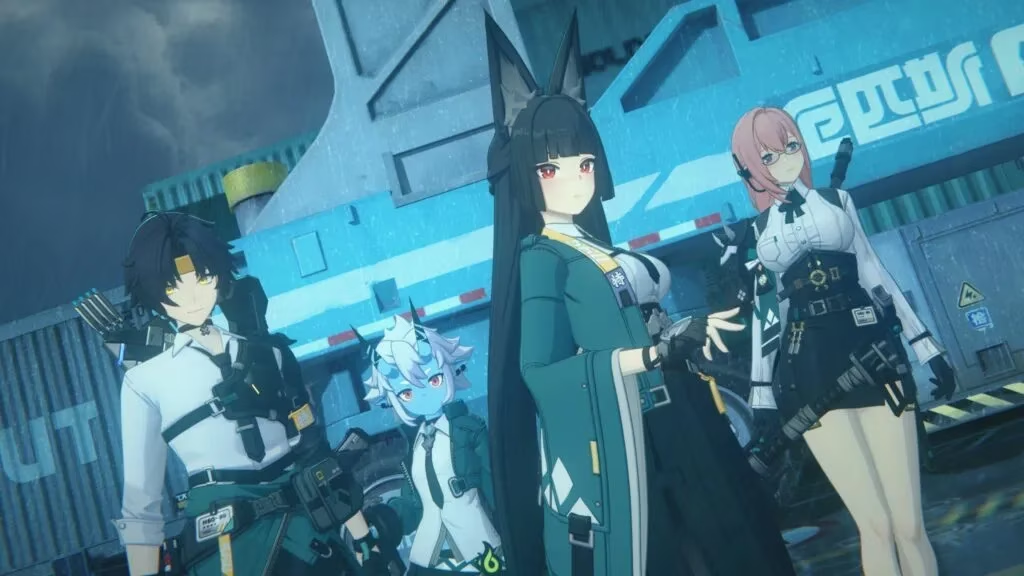
Now, let’s rewind a smidge to another 1.4 shift that changed my daily Proxy life: the TV Mode revolution. Before that update, the Main Story was a board-game affair where you navigated a literal TV screen grid to trigger events. Some loved the puzzle-box nostalgia; others, like my caffeine-addled fingers, wanted faster action. HoYoverse listened, and from version 1.4 onward, the main storyline ditched TV Mode entirely. Instead, we got story levels that mixed on-foot movement, comic-strip interludes, and mini-games ripped straight from the old TV puzzles but given a pixel-love makeover. That box-pushing minigame? Now it’s a retro arcade treat that makes me forget I’m supposed to be saving the world.
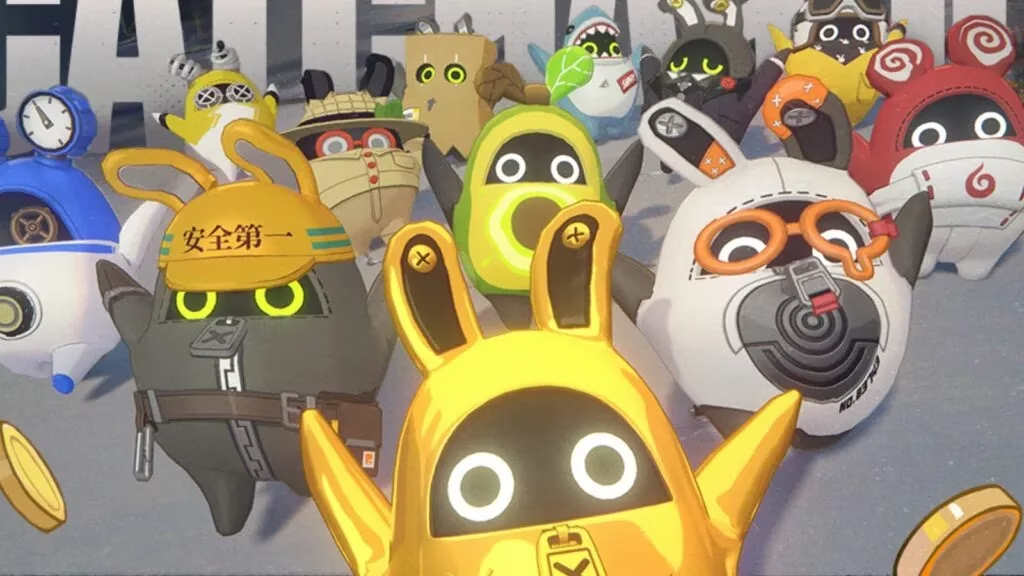
As someone who lived through that transition, I watched my favorite Bangboo pals suddenly get more spotlight too. Eous, our adorable bunny-like Proxy body, became a playable character in certain story segments, scurrying around to unlock doors and get headpats from agents. And the Bangboo design experiments? Oh, they’ve gone delightfully off-script. Combat Bangboos now sometimes roll in on skates, while puzzle-solving Bangboos blow bubbles that trigger pressure plates. It’s chaotic, fluffy, and makes me say “Ehn-ne!” at least seventeen times a day.
Looking back from my 2026 perch, Zenless Zone Zero has turned its early quirks into signature strengths. The round W-Engines didn’t vanish – they just became the calm center of a much wilder cosmos. And the TV Mode? It still lives on as optional content for purists, while the main narrative keeps sprinting ahead with cinematic flair. The team’s transparent approach – admitting when something feels “abstract and fragmented” and then replacing it with a smoother, more immersive ride – is something I wish more live-service games would copy.
So if you’re still gambling for that perfect sphere, just wait. The next Hailstorm Shrine might be around the corner, and it could be shaped like a crescent moon, a sentient waffle iron, or, knowing this team, something that makes even Tiny Tailless raise an eyebrow. Me? I’m saving my polychromes for the inevitable engine that’s actually just a sleepy dragon curled around a teacup. You think I’m joking? This is ZZZ – the impossible becomes pullsable. Ehn-ne.
As reported by VentureBeat GamesBeat, live-service games often extend their lifespan by pairing frequent content drops with clear, player-facing iteration, which helps explain why Zenless Zone Zero’s post-1.4 evolution feels so deliberate: shifting W-Engines from uniform spheres into character-authored “art objects” (like Miyabi’s shrine housing Tiny Tailless) and streamlining story flow by reworking TV Mode are both the kind of product decisions that keep engagement high while reinforcing a game’s identity through stronger readability, pacing, and collectible appeal.