As a professional gamer, I've been closely following the recent, unprecedented wave of voice actor recastings that have rippled through the gaming industry in 2026. What began as isolated incidents in HoYoverse's titles has rapidly escalated into a broader conversation about actor rights, artificial intelligence, and the complex intersection of geopolitics and gaming. The sudden replacement of several prominent voice actors, discovered by the performers themselves only when official patch notes were released, has sent shockwaves through player communities and the development sector alike. This isn't just about changing voices in our favorite games; it's a stark reflection of the ongoing battle for the soul of creative work in an increasingly digital and automated age.
 .png?width=570&quality=85&format=jpg&dpr=3&auto=webp)
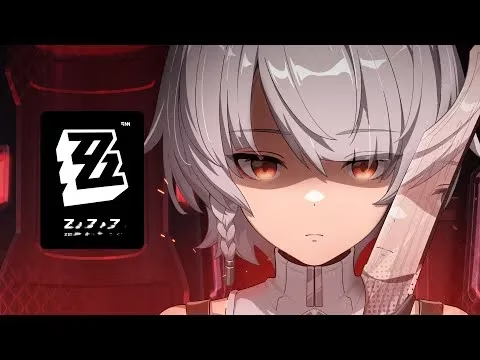
The Zenless Zone Zero Recasting: A Stand Against AI
The situation came to a head in March 2025 when two voice actors for the highly anticipated action RPG Zenless Zone Zero were unexpectedly recast. Emeri Chase, the original voice of Soldier 11, took to social media to clarify the circumstances. 🎤 Chase explained they were replaced because they were "unwilling to perform work not covered by a SAG Interim Agreement during a strike for AI protections." This strike, led by the US actors' union SAG-AFTRA, began in July 2024 and has its core dispute centered on safeguarding performers from the potential misuse of artificial intelligence. Chase emphasized a critical distinction: many actors are voluntarily choosing not to work on projects—even non-union ones—that do not offer the specific AI rights the union is fighting for, viewing this as solidarity in a battle for the future of their profession.
The other actor affected was Nicholas Thurkettle, the voice of Lycaon. In a revealing post, Thurkettle shared that he learned of his recasting at the same moment players did. Despite not being a SAG member, he made a personal stand. "I'm not SAG but what game companies want to do with AI is an existential threat," he stated. "I took a personal stand to ask for protection, and had to be willing to give up the best thing that's ever happened in my professional life." Both actors highlighted a complete lack of prior communication from HoYoverse or the recording studio, Sound Cadence, regarding the decision.
The studio, Sound Cadence, later issued a statement affirming its contracts include "explicit AI protections, regardless of union status." They expressed understanding for the actors' positions but defended their process, stating they always reach out to original actors to reprise roles before exploring other options. However, the actors' accounts directly contradict this claim of prior communication, painting a picture of a sudden, opaque corporate decision.
The Genshin Impact and Arknights Controversy: A Political Dimension
Simultaneously, a separate but equally disruptive recasting occurred in Genshin Impact. HoYoverse announced that Japanese voice actor Showtaro Morikubo, the voice of Ifa in the Japanese version, would no longer be part of the project "due to various circumstances." The plot thickened just days later when Morikubo was also removed from the popular tower defense gacha game Arknights, where he voiced the character Elysium. The Arknights development team issued a public apology for the "great inconvenience and concern caused."
While no official reason was given, fan speculation, reported by outlets like Automaton, points to Morikubo's participation in a 2024 live reading titled Inochigake no Shougen (Life-risking Testimonies). This reading was based on a book containing testimonies from Uyghur people, a work that has drawn severe criticism from the Chinese government. The actor's association with this material is widely believed to be the catalyst for his abrupt removal from these major Chinese-developed games. This incident underscores the immense pressure on global game companies to navigate sensitive geopolitical landscapes, often resulting in swift and decisive personnel changes.
The Broader Industry Strike and Its Implications
These recastings are not happening in a vacuum. They are direct consequences of the sustained SAG-AFTRA strike, which the union itself warns is aimed at closing "alarming loopholes" for "AI abuse" in new contracts. The union has urged all performers to "seriously consider the consequences" of working without these protections, highlighting the dual risk of undermining the collective action and personally exposing themselves to potential AI misuse.
The core fears driving the strike include:
-
Digital Replication: The unauthorized use of an actor's voice to generate new lines indefinitely.
-
Ownership of Likeness: The use of AI to create performances without fair compensation or consent.
-
Job Displacement: The potential for studios to replace human actors with AI-generated voices for future work or alterations.
A Gamer's Perspective on the Fallout
From my perspective in the gaming community, the fallout is multifaceted. 😟 Firstly, there's the immediate impact on game immersion. Voice acting is a cornerstone of character connection in narrative-driven games like Zenless Zone Zero and Genshin Impact. A sudden change can be jarring and disrupt the emotional bond players have formed. Fan communities on social media are filled with expressions of disappointment and support for the original actors.
Secondly, these events reveal the often-opaque power dynamics between massive development studios and the individual artists who bring their worlds to life. The fact that Chase and Thurkettle discovered their fate through public patch notes is a troubling indicator of communication breakdowns and a lack of respect for the creative partnership.
Finally, the Morikubo situation adds a complex political layer. It demonstrates how external geopolitical tensions can directly influence creative content, forcing developers into difficult decisions that balance artistic integrity, market pressures, and international relations.
The Path Forward in 2026
As we move deeper into 2026, these incidents are likely harbingers of more industry turmoil. The questions they raise are fundamental:
-
How will AI be ethically integrated into game development? The technology is not going away, but frameworks for its fair use must be established.
-
What is the responsibility of global studios in politically charged environments? Can they protect their artists while operating in a global market?
-
How can transparent communication be ensured between studios and contractors? The current model, as evidenced, is failing.
The courage shown by actors like Emeri Chase and Nicholas Thurkettle to stand on principle, potentially at great cost to their careers, has galvanized both the acting community and a segment of players. It has pushed the conversation about AI ethics from boardrooms and union halls directly into the patch notes and character teasers of our favorite games. The resolution of the SAG-AFTRA strike will set a critical precedent. As players, we are not just passive consumers; we are witnesses to a defining struggle over who controls the digital souls of the characters we love, and what values will shape the virtual worlds of the future.