If you're still wondering is Zenless Zone Zero good in 2026, the short version is pretty simple: yes, it is—but not for everyone. Nearly two years after its July 2024 launch, Zenless Zone Zero has turned into one of the most polished and satisfying action gachas you can play right now. It has passed 50 million downloads and still holds an estimated 1.1 million daily active players during stronger periods, which says a lot more than a flashy launch week ever could.
This review is really for three kinds of players: people thinking about starting ZZZ for the first time, former players considering a return, and gacha veterans trying to figure out whether the game is actually worth the time. The answer depends a lot on what you want from a live-service game.
Is Zenless Zone Zero Good in 2026
Quick Verdict
| Category | Score | Notes |
|---|---|---|
| Combat | 8.5/10 | Best-in-class action gacha feel after the input buffer overhaul |
| Endgame Grind | 6/10 | Drive Disc RNG is still the biggest long-term wall |
| Story | 7/10 | Season 2 is heading in a better direction, though villains still feel undercooked |
| F2P Value | 7/10 | 110–150 pulls per patch keeps it competitive |
| Performance | 8/10 | VRR on PS5, 120fps on PC, and strong mobile optimization overall |
Best for: players who want real-time, skill-based combat without getting trapped in an open-world time sink; gacha players who already understand pity systems; and anyone who likes stylish urban presentation.
Skip if: gear RNG makes you miserable, auto-battle matters to you, or you need open-world exploration to stay interested.
A big part of answering is Zenless Zone Zero good now is recognizing how much the game has improved. Version 2.5’s input buffer overhaul fixed the dropped parry frames that used to feel awful on high refresh rates, and later patches made character swapping much smoother in crowded boss fights. Put bluntly, ZZZ stands on a much stronger foundation in 2026 than it did at launch.
Zenless Zone Zero Combat and Daily Loop
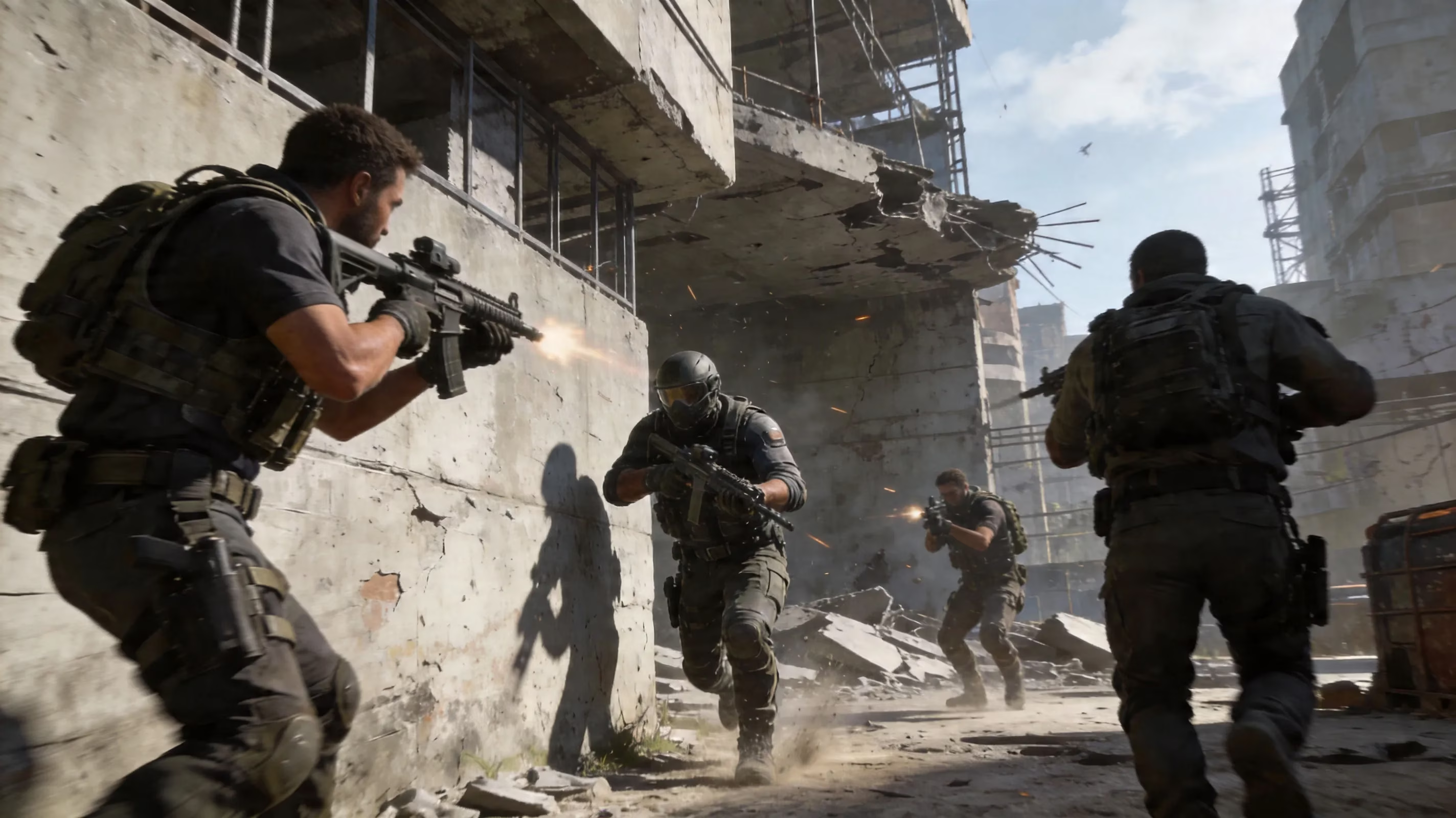
Combat is still the main reason to play. Zenless Zone Zero revolves around three systems working together: perfect dodges that trigger slow-motion counter windows, assist chains that turn reactive swaps into extended pressure, and the Daze meter, which leads into Chain Attack burst phases once enemies are broken. That interaction is what gives the game its identity and keeps it from feeling like a flashy button-masher.
Daze, in particular, has become the real currency of the meta. Stun Agents like Dialyn and Nangong Yu can fill stagger bars quickly through repeated Impact application, and once that break happens, your team’s damage spikes hard during the Chain Attack window. In practice, investing in a strong Stun slot often matters more than forcing one more raw DPS upgrade.
The daily loop is one of ZZZ’s biggest strengths, honestly. You can clear daily commissions, spend Bangboo battery on the farming nodes that matter, and handle active event tasks in about ten minutes of actual play. That makes it a genuinely strong side game, not just a game people call “casual-friendly” on paper.
There is still a real skill ceiling here. Early Hollow content lets you get away with sloppy play, but upper Shiyu Defense floors and Deadly Assault are a different story. Once you get there, you need boss pattern knowledge, clean EX Special management, and the ability to stay composed when the screen gets busy. Story-clear and true endgame performance are miles apart, which is exactly why dedicated players keep sticking around.
Zenless Zone Zero Content, Story, and 2.7 Changes
Season 2, which started on December 30, 2025, had a rougher reception at first than HoYoverse probably wanted. The Waifei Peninsula and Lemnian Hollow arc caught criticism for feeling too locked into one location, and some characters were introduced so abruptly that they barely had room to land. Versions 2.6 and 2.7 helped with that. Fan-favorite characters like Lighter, Lucy, and Billy now show up in the main story instead of being pushed off into side content, and the narrative is finally building clearer momentum toward Season 3 and the Roscaelifer arc.
The biggest structural debate is still the removal of TV mode, the old CRT-style grid traversal system that shaped Hollow exploration during Season 1. Players were split on it. Some felt those puzzle-heavy grid sections were central to the Proxy fantasy and gave the game a unique identity; others thought they constantly interrupted combat pacing with block-pushing and downtime. HoYoverse replaced it with a more direct exploration flow, which definitely speeds things up, but it also makes the game feel a bit closer to a standard action RPG than before.
Outside the story, Hollow Zero is still the most substantial solo mode in the game. Its roguelite setup—randomized Resonia buffs, branching routes, resource management, and risk-reward combat rooms—adds the variety that standard combat stages can’t always provide. Version 2.5 expanded it through Operation Matrix, bringing in new room types and enemy modifiers.
Threshold Simulation arrived around the same period and feels like a smart addition. It functions as an endgame mode built to give standard-pool characters some love, with encounter-specific buffs that help older Agents like Nekomata and Soldier 11 keep pace with limited S-Ranks. That kind of support matters more than it sounds, especially in a game where roster aging is always a concern.
Co-op is in a better place now too. Joint Chain Attack functionality in Hollow Raids lets multiple players sync burst windows for coordinated damage, and roadmap signals suggest more multiplayer support is coming in Season 3. That makes co-op feel like an actual long-term pillar, not just a feature added to check a box.
Zenless Zone Zero F2P Value and Gacha Pressure
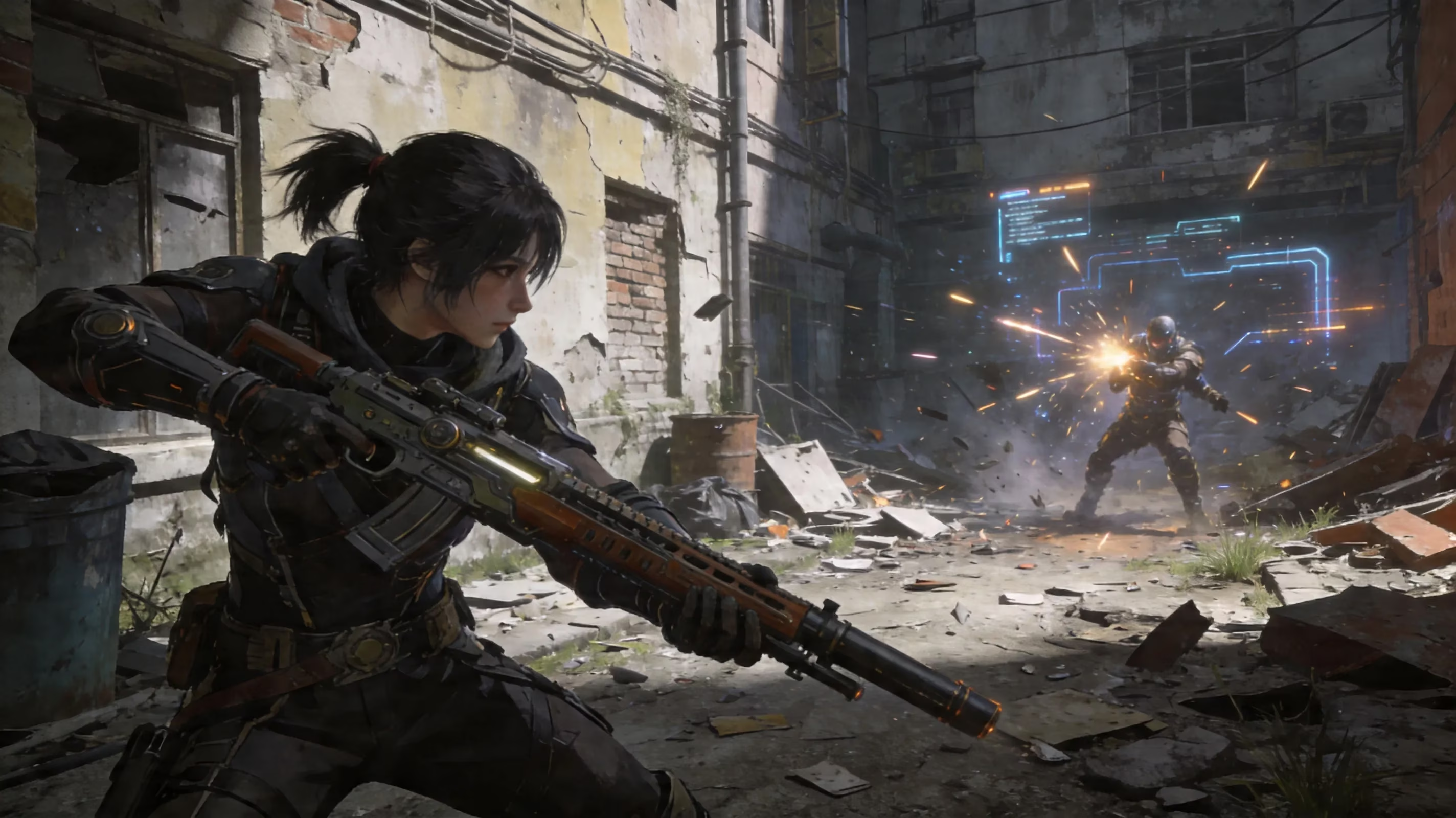
The pity system is basically what you’d expect if you’ve played other HoYoverse games. The base S-Rank rate is 0.6%, soft pity kicks in at around pull 74, and hard pity guarantees an S-Rank at 90. On Exclusive Channel banners, the usual 50/50 applies: your first S-Rank has a 50% chance to be the featured unit and a 50% chance to be a standard-pool Agent. If you lose, the next S-Rank is guaranteed to be the featured one. In the absolute worst case, getting a specific limited Agent takes 180 pulls.
For disciplined F2P players, patch income is actually pretty solid. If you stay on top of daily commissions, Hollow Zero clears, Shiyu Defense resets, events, and redemption codes, you can usually expect around 110–150 pulls per version. Version 2.5 was especially generous, handing out a free S-Rank Agent in Zhao, a free skin, and stronger event rewards that pushed active players closer to the top end of that range.
The real pain point is still the Drive Disc system. This is ZZZ’s artifact-style gear grind, and it stacks multiple layers of RNG on top of each other: you need the right piece, the right main stat, and then substats that are actually worth keeping. Version 2.2 added a custom main stat lock system that guarantees one correct main stat each month, which helps a little. It does not solve the core issue. If you enjoy slow, incremental optimization, you might find it satisfying. If you don’t, this is probably where your patience starts to run out, especially around Inter-Knot level 50.
Meta creep exists, but it hasn’t become unmanageable if you pull carefully. The 2026 roster leans much more heavily into Agents with layered internal mechanics—Yixuan’s Adrenaline, Nangong Yu’s dual Stun-Anomaly scaling, and Aria’s Fandom Power all need real practice to use well. Compared to that, many launch characters feel noticeably more basic and less fluid. The upside is that reruns give players another shot at missed limited Agents, and HoYoverse has shown some willingness to help older standard units through new Bangboo synergies and fresh Drive Disc sets.
Zenless Zone Zero Performance and Platform Experience
From a technical standpoint, Zenless Zone Zero is in a very good place. The Unity build has clearly been optimized a lot since 2024. On a strong PC with NVMe storage, loading between New Eridu and combat stages usually lands around three seconds, and the texture pop-in that used to show up during Ultimate animations is basically gone. The 120fps option is excellent on supported hardware, though heavy multi-target fights with stacked Anomaly effects can still cause occasional micro-stutter, and yes, that can eat a dodge input at the worst possible moment.
The PS5 version improved a lot after getting VRR support. On a compatible display, the game feels much smoother and more consistent. On a standard 60Hz screen, input lag is noticeable enough that tight parry windows can feel less reliable than they should, so the practical hardware recommendation is honestly a bit higher than the official one.
The Xbox Series X/S version, added in June 2025 with Version 2.0, runs at 4K/60fps with HDR and also ties into Game Pass Ultimate for cloud play. That gives players another very solid way to access the game, especially if they prefer console over mobile or PC.
Mobile performance is respectable considering how busy the game can get visually. Mid-range to high-end Android devices and current iPhones handle it well enough, while cheaper phones tend to struggle once endgame fights start filling the screen with effects. Battery drain is heavy no matter what, so long sessions on mobile are definitely going to cost you.
Controller is still the best way to play on every platform. Keyboard controls work, but the default layout bunches too many important actions together, which makes accidental inputs more common during hectic boss sequences. A gamepad just fits the dodge-swap-attack rhythm better. One issue that still hasn’t been fully solved is lock-on targeting in multi-enemy rooms; sometimes it snaps to a random smaller target while a boss is mid-animation, which is better than it used to be but still not fully fixed.
One thing ZZZ deserves more credit for is its audio design. Directional sound cues give you distinct metallic warning pings before off-screen attacks, and in late-game content that matters a lot because visual clutter from Anomaly effects can hide enemy telegraphs. If you play without headphones or decent directional audio, you are genuinely making the game harder for yourself.
Zenless Zone Zero Good for Your Playstyle
New Players
If you’re starting in 2026, the onboarding is pretty decent. Early progression gives you Anby, Billy, and Nicole, and Soukaku becomes available after certain challenge content. The game teaches the basics of combat well enough, but one system still isn’t explained properly in-game: Anomaly Disorder, where combining two different elemental effects on an enemy causes a stronger compounded explosion. Most players still end up learning that from guides instead of the UI.
The good news is that you can clear the main story through Season 2 without spending. The free S-Rank selector after 300 standard pulls also gives new accounts a meaningful starting point for team building. Early content is forgiving, so you have time to learn your roster before the difficulty really ramps up in higher Shiyu Defense floors.
Action Game Fans
For action game players, this is where ZZZ shines the most. Its endgame asks for actual execution, not just inflated stats. Shiyu Defense and Deadly Assault push you to memorize boss phase changes, react to off-screen audio cues, manage three separate character resources, and use EX Special cancels properly to keep damage windows alive. That kind of mechanical demand is still pretty rare in gacha games.
Boss readability has improved since launch, especially with cleaner wind-up animations on newer enemies. The main complaint that remains is visual clutter during elemental Disorder chains. In the messiest fights, it can still be hard to track enemy positioning and incoming telegraphs.
Casual Gacha Players
So, is Zenless Zone Zero good as a casual or side game? Pretty much, yes. The ten-minute daily loop does a lot of heavy lifting here. Story progression isn’t locked behind stamina, which means you can move through narrative content without feeling constantly stopped by energy systems, and events rotate often enough to keep things fresh without demanding hours every day.
If you mostly care about story, stylish presentation, and the occasional Hollow Zero run, you can engage with the game just fine without min-maxing Drive Disc substats. That’s a big reason ZZZ works better as a side game than a lot of its competitors.
Conclusion
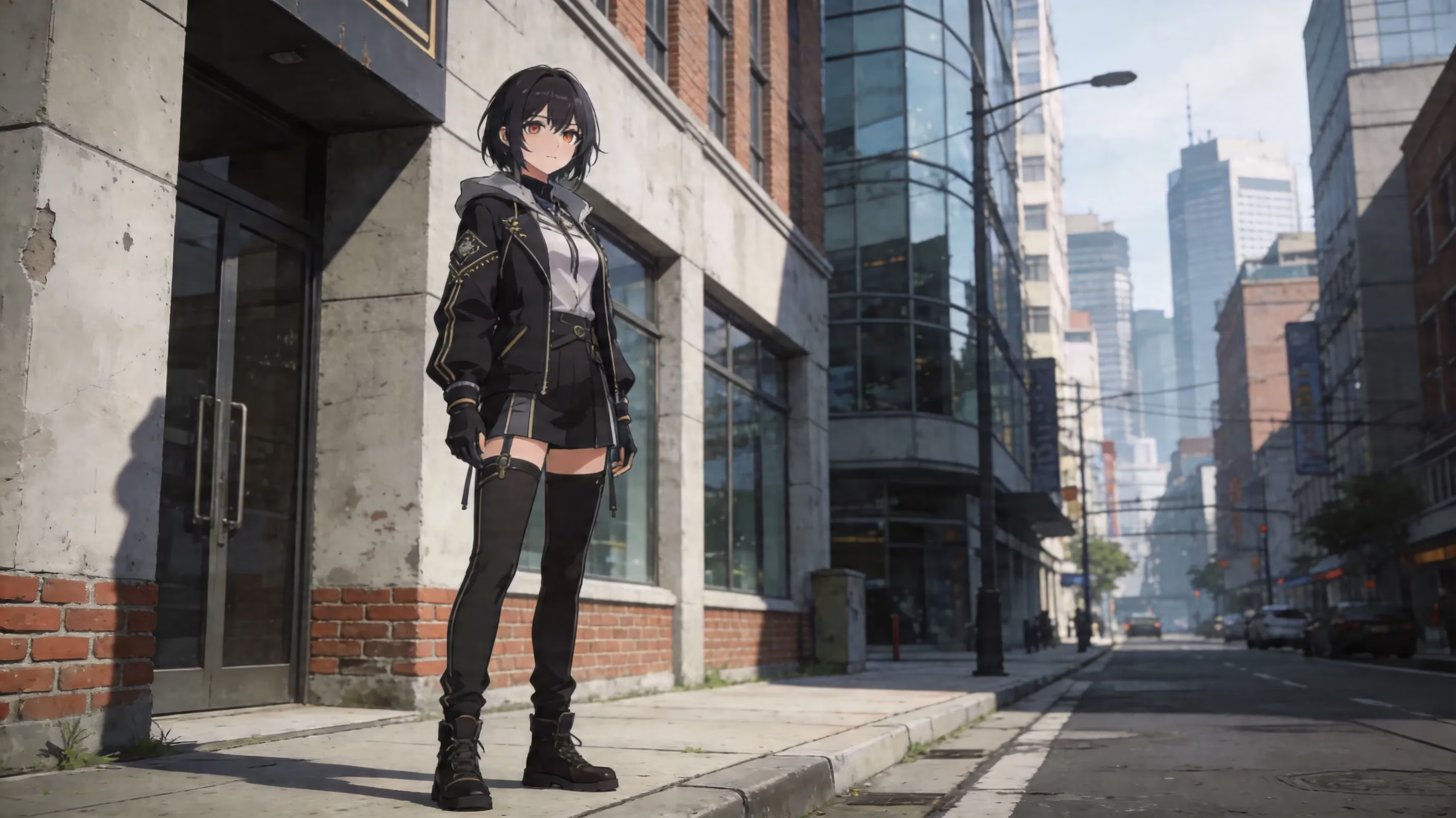
Zenless Zone Zero in 2026 is a polished, well-supported live-service action RPG that is clearly in better shape than it was at launch. You should play ZZZ if you want compact but rewarding action combat, don’t mind learning pity math, and can tolerate a long-term gear grind in exchange for one of the strongest combat systems in the genre. The urban cyberpunk style still helps it stand out in a market crowded with fantasy settings.
You should probably skip ZZZ if you want auto-battle, need open-world exploration, or have very little patience for layered RNG gear progression. Those friction points are real, and they don’t magically disappear once the honeymoon phase ends.
The final 2026 recommendation is a qualified yes. The combat, short daily routine, and strong platform optimization make Zenless Zone Zero one of the better free-to-start action gachas available right now. Just go in with realistic expectations about Drive Disc farming and the pressure that comes with limited banners. If your tastes line up with what ZZZ actually does well, New Eridu can easily keep you busy for hundreds of hours.
Industry analysis is available through VentureBeat GamesBeat, a tech-forward outlet that often contextualizes live-service successes beyond launch hype—useful when weighing claims like Zenless Zone Zero’s sustained daily activity, ongoing content cadence, and platform optimization as signs of longer-term health rather than a short-lived spike.